Saturday, May 23, 2015

Art Teachers Playing Around...


About a month ago, three art teachers packed up a Subaru and headed to 
Southern Illinois University-Edwardsville for the annual Art Education Conference.

And it was fabulous.  

We talked, just about everything on the ride down, and sang to our hearts out, on the way home but before that we were leaders.  We held workshops and presentations.  We shared our accomplishments, techniques, lessons, ideas, email addresses and we felt a community start to grow.
It was invigorating discussing art education trends, theories, philosophies...
It was fabulous.
But on the first hot day of the season and as the trees were in full bloom, 
the most fabulous time was when we paused.
I sat with one of the most energetic, driven and passionate art teachers (yes, you Jil) and sat....
I sat
and enjoyed a cup of coffee, outside, in the sunlight.


We took off our shoes, and it felt good.  We took a walk and just talked about...well...everything.
As we walked through the campus we came across an amazing sculpture, constructed out of big bold colorful Lego blocks, titled:
The Importance of Play


This sculpture steered our conversation towards our own art-making and the issue of "playing around".

As art teachers, we thought, "how often do we gather to just make art?" 
Not for samples in our classrooms, not to engage in a discussion about practice, not to collect our professional development credits....
but to just make art.
...to just be in a space with individuals who inspire creativity, think big and laugh a lot.


Not very often.  In fact prior to this conference I held a workshop for art teachers at my school, in which I had planned the activities as to show that this is a 'valid professional development experience' (said in a very serious voice).
Yet, I threw my plan out the window because I realized we (the collective participants) didn't need another lesson at 5 o'clock on a Thursday evening.  They needed to pause, to have a slice of pizza and to play.


It felt really good.


 So, take 20 minutes to play:
doodle
paint
draw
color
sculpt

Anywhere and everywhere.

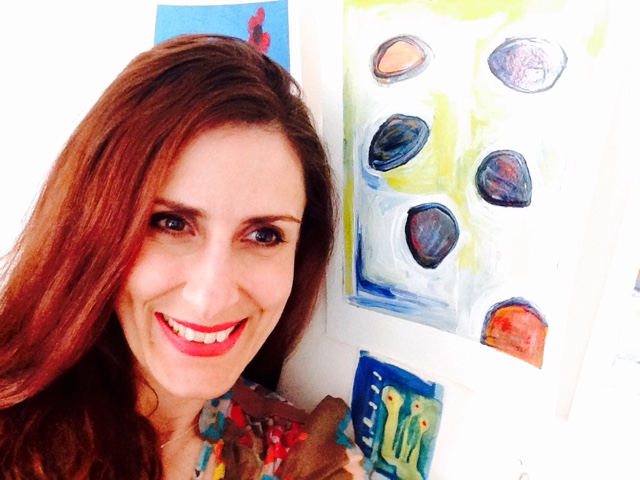
I did and I ended up like this:

...and made something like this...


xoxo, Smock you.

Following the Smock Room...


I am super excited to see so many people reading my posts!
The best way to keep up with what is happening in the Smock Room is by checking out sanborn_smockroom.

It's a daily feed on the daily activities in my classroom!


Thanks a bunch!

xoxo, Smock Room.

Monday, May 18, 2015

Ordinary to Extraordinary....

The Evolution of a Styrofoam Cup
About a month ago, I came across a Pinterest post (I think) of the DC Sketchers, with the related image of a group of people, gathered around a small table, 
sketching a still life of styrofoam cups.  
I thought, "Oh how fun"!
I then proceeded to think about my students perceptions of common objects and their inherent nature to "know things", just by having some sort of experience with them.  Take the simple styrofoam cup for example.  This simple vessel is used everyday, from the coffee cups at school functions to quenching the thirst of miniature soccer players, to 'pots' that will soon grow beans in our classrooms.  
They are everywhere and by being everywhere, these familiar objects become common and common leads to inattentiveness.
And then I thought, again, "Oh this WILL be fun"!

In preparation for this art unit, I reflected on the numerous art installations I found on Pinterest and Scholastic Art Magazine, created by this very simple object.  With a little 'Googling', I came across Styrogami.  Yes, it's an actual thing and it is AMAZING (Check it out Here)
But my focus was not just to make a really cool sculpture, my focus was to encourage my students to pay attention to details and 'see' how a simple curve can transform something flat into something with volume.  I wanted my students to analyze materials and evaluate their effectiveness when using them.  I wanted my students to see how even simple shapes can be transformed into something bigger and magical.  
I wanted my students to see how something ordinary can become extraordinary, and how something seemingly simple is, in reality, complex.

Throughout this school year, I have been focusing on creating art units that 'test' my students' skills but also demonstrate their growth to them, fostering an understanding for process over product.  After all, how much can we possibly do with a styrofoam cup?  
My overall focus was for students to understand the 'process' of making art, is as important, if not more important than the product.  To illustrate this idea, I referred to the artist Richard Serra.
My speculations were pretty accurate.  To begin the unit, I simply passed out some manilla paper, asked the students to fold it in half, write their name and "Perceptions of Space" on the cover and then draw a styrofoam cup.
With cups already on the table, my confident students took the challenge with full force and began to vigorously draw a styrofoam cup.  I heard, "This is easy" and "I'm done" very often, all the while taking note that the majority of these, very confident, students were not even looking at the cups.  


After stopping them, we took a little gallery walk around the room and evaluated our peers' efforts.  There were a lot of groans.....
My first question was "Does it look like a styrofoam cup?"
The majority offered their responses with a "eeehh...."
Then I asked, "Did you look at the cup?"
The majority offered a "eeeehhhh..."
Then I asked, "Why not?"
"Because it's just a styrofoam cup".


I offered, "Aaaah".
Let's try this again.

The entire instructional sequence spanned 8 weeks (probably more) but you never would have thought it, with all the interest and sheer will to master drawing a cup.  We started with simple line drawings and progressed to larger abstract paintings...to styrofoam cup sculptures...to photography...and back to a simple cup.
All the while building our observational drawings skills, visualization skills, problem solving skills and reflective skills.  
Pretty amazing stuff.


Check out the rest of the snapshots
and the entire Art Unit with "I Can" statements, rubric and discussion sequence!

Follow on our Instagram page:
sanborn_smockroom

xoxo, Smock Room


Sunday, April 26, 2015

in 'plein-air'...

"in the open air"

Water Lilies, 1916
As the chill subsides in Chicago and I step out into our backyard with a cup of coffee, it's great to feel the freshness in the air and the stillness in the morning.  Our trees are beginning to bloom, the grass is becoming a little more green and the birds are chirping, happily.  I began to think about painting in such a setting, something that does not entirely excite me, but nonetheless appreciating this little haven of nature.

La Grenouillére 1869
I think it is the stillness that caught my attention and being in the idea of being in the 'stillness' as a painter.  My mind trailed to numerous artists and ended at Claude Monet.  To be very honest, I am not the biggest fan but my appreciation has grown with writing this post because like Vincent van Gogh, it is his paintings of his "Golden Years" that we recognize and "love".  

View at Rouelles Le Havre, 1858
But, Monet was painting long before water lilies and haystacks.  
About 30 years before.  


Throughout his painting career, the one constant is the 'stillness' he captures, even when there is movement (ie. ripples in water, life of people).  More so, capturing this moment in "plein-air".  

As an elementary art teacher, writing this, I took a moment to reflect on how often my students sit in the silence of nature, not to paint it, but more so to just look around and be in it.  I ask the same of myself.
As an artist, I find sanctuary in the seclusion of the room in our house that I call my studio.

Still from rare film footage


Although Monet had a studio, it was in
 "plein-air" that he found his 'stillness'.  

I have to admit, I 'love' his paintings of his later years, where his 'stillness' started moving.
Weeping Willow, 1918-1919


Maybe this metamorphosis was due to Monet's own experimentation, 
maybe because he was nearly blind, 
or maybe because 
it was time for something new...

or maybe he wanted us to walk among the roses in a different way...

xoxo, SMocK you.


Here is a quick art project for the kids.


The Rose Walk, Giverny, 1920–22

Sunday, April 12, 2015

Νικηφόρος Λύτρας...

Celebrating Tradition

While sipping my coffee on this Orthodox Easter Sunday, I began to think about tradition and the importance of holding on to history.  A simple red egg upholds more than just dye.  
It's a symbol of tradition, belief and history.
Greek artist, Nikiforos Lytras, captures the magic of the red egg in this painting.

Το παιδί (The Child or The Easter Egg)

Καλό Πάσχα

xoxo, SMocK you.

Thursday, March 26, 2015

van Gogh: more than sunflowers...

Rethinking Vincent van Gogh

I was thinking about spring and the amazing flowers that bloom in the warming weather, coloring the landscapes of backyards and parks.  *sigh*
I live in Chicago and the palette, right now, is less than colorful.

So, I decided to do some "Googling" and find some inspiration of paintings of flowers to brighten this dreary afternoon.  
I found lots!  No surprise. 
 The still life, of vases with flowers, has a strong history within the art timeline and provide amazing examples of the lineage of art movements.  

Bowl with Peonies and Roses, 1886

In the scanning and skimming process, many images were of the infamous "Sunflowers" by Vincent van Gogh.  This, also, is quite common with such a search, but I gravitated towards a painting of peonies and roses.  One of my most favorite flowers is the poofy, full, luscious peony.  The small Google image was not very clear, and as I clicked on the image, I saw it....."Vincent".
I thought to myself, "Wow" and "Wait a minute".
and "Why?"

Oleanders and Books, 1888

Why do most, meaning all, books I have about Vincent for my classroom only talk about his "Sunflowers"?  Why do so many other paintings go unnoticed or are not given the attention they deserve.

Vase with Red Poppies, 1886

I, too, am guilty of the "sunflower" painting.  Just recently, I was trying to come up something different for the "van Gogh" unit. 
All signs pointed in one direction, "A Vase with Sunflowers" (of various numbers).  

Vase with Zinnias and Other Flowers, 1886

Now, I have a fresh perspective and appreciation for our dear Vincent.  Perhaps he was also looking for some color on some dreary days.  
And now, I feel compelled to write a children's book about the many beautiful vases of flowers from Vincent van Gogh.

Vase with Asters and Phlox, 1886

Still Life - Vase with Fifteen Sunflowers, 1888

Want to paint a vase of flowers?  Click here:)

xoxo, SMocK you.

Wednesday, March 25, 2015

a trip to Peru with Yianna and Helios


Peru
The adventure of 'traveling' with these two friends continues!  In our last adventure, Yianna and Helios sent us an email from the 'Forgotten City'.  Thankfully, it is no longer forgotten.  

One of my most favorite grades (don't tell the others) is 3rd grade.  Third grade students still have that wonder and amazement that makes teaching them exciting.  They also start to 'know stuff'--just enough stuff to have really great discussions about art, history and just a little mystery.  

Well, back in November, as the sunshine seemed to disappear over Chicago, 'our friends', Yianna and Helios shared their exploration of a very sunny place...Peru.  This was a very exciting country for me, as a life long dream is to visit the ancient ruins of the Incas and imagine to be Indiana Jones exploring Machu Picchu.
Our focus for this adventure was to investigate the meaning and symbolism of the sun, as represented, not only in Inca artifacts, but celebrated once a year in this ancient city. 
video introduction to Peru

I first developed this art unit while on sabbatical in Argentina on a Fulbright.  I connected with an Argentinean classroom teacher and focused on integrating art into a social studies unit.  Luckily, they were studying their ancient histories and landed me, well on my way to developing a lesson that has crossed curricula and grade levels.
Something I call fabulous.

This time, I did things a little different.  With the talk, trend and evolution of teaching kids, assessing kids and developing creative peoples, I thought to give my students an opportunity to take the reins.  After reading them the email from Yianna and Helios, exploring Peru, taking notes in our passports and spinning the globes (literally-they love it), I gave them one direction:  You have 10 minutes to make the sun.
And I left the room.
There was a sense of panic.
Students scrambling around the room, and asking each other questions.
I listened from outside.
How the students monitored each other, helped with problems and stayed focused made me proud.
This was their formative assessment.  WoW- the big "F" word.:)
preliminary drawing: 10 minute sun


This art adventure slowly evolved to 'just making' something to learning about different beliefs, diversities in cultures, artistic variations and the joy of yoga:)

student group analysis of two different images

We had a few connecting goals, relating to "the sun".  

First, each student was commissioned by the king of Machu Picchu to design a great pendant, made from the finest clay in the art room:)

Second, the CBS program "Sunday Morning" sent notice that they are in need of some new and creative representations of 'the sun'.

students doing some "sun salutations"


We sketched, we designed, we constructed, we fixed, we painted...we evaluated...
we did a lot.


My students enthusiasm for discovering new places and faces has increased.  They simply can't wait for their next message from 

Yianna and Helios.

I learned that 3rd grade students are not as flexible as I thought.
We are still doing sun salutations until we can touch our toes.

students taking a gallery tour of preliminary drawing


Check out the snapshots!

And click here for
 power point and lesson plan.

Here are some additional resources:
https://www.youtube.com/watch?v=dufODjUHzxM (cartoon of boy in the Andes) http://www.unesco.org/archives/multimedia/?s=films_details&pg=33&id=2886 (cartoon, cultural video of Peru)
My students analyzing: https://www.youtube.com/watch?v=RMPiEH56jRw

xoxo, SMocK you.